
June 4, 2026
- Introduction:
Human Rights First – Ethiopia is a human rights organization duly registered and recognized by the Federal Democratic Republic of Ethiopia (FDRE) Civil Society Organizations Authority under license number 4118, pursuant to the Civil Society Organizations Proclamation No. 1113/2011. The organization operates across multiple regions of the country to ensure respect for the human rights of all citizens. As part of this mandate, Human Rights First – Ethiopia has compiled the following investigative report based on information obtained from multiple sources concerning ongoing forced recruitment and forced returns to military units in various areas of the Tigray Region.
- Background
Following the conclusion the two-year armed conflict that began on November 4, 2020, between the Federal Government and its allies and Tigrayan forces and the subsequent signing of the Pretoria Cessation of Hostilities Agreement we harbor deep concerns that the threat of renewed conflict may once again loom over the Tigray Region. These concerns stem from the failure of the signatory parties to fully implement the terms of the agreement.
Under the Pretoria Peace Agreement, the region was provisionally administered by an Interim Regional Administration led by Lieutenant General Tadesse Worede. However, the Tigray People’s Liberation Front (TPLF) has claimed that the Federal Government’s decision to extend the term of this interim administration was unilateral. Coupled with other alleged violations, the TPLF announced the reactivation of the 2020 regional council which had been dissolved under the Pretoria Agreement and restructured the region’s executive bodies, resulting in a severance of relations with the Federal Government.
Concurrently, the Federal Government has failed to supply basic provisions and services to the region, including fuel, regional subsidies, adequate cash flow, and civil servant salaries. As a result, residents of the region face severe hardship. Over one million internally displaced persons (IDPs) remain in shelters, creating a profound social crisis in Tigray.
Against this backdrop of heightened political and military tensions between both parties, extensive campaigns of forced recruitment and forced returns to military units are being carried out across the Tigray Region, as detailed below.
- Indicators of Forced Military Recruitment
Human Rights First – Ethiopia has received reports indicating that forced military recruitment is taking place across most areas of Tigray. Given the volume of information received, this investigative report is based on testimonies from a total of 27 eyewitnesses, including family members of forcibly recruited youth, witnesses to active forced recruitment operations, individuals involved in carrying out recruitment, and young people who managed to escape forced conscription.
Forced recruitment began approximately three months ago, particularly in the Northwestern Zone. Following the dissolution of the Interim Administration and the return of an administration claiming to be the previously elected government, these practices have aggressively expanded to all areas. Forced recruitment primarily targets three categories of individuals:
- All individuals who previously served in the Tigray Army are being rounded up from their current locations.
- Families that did not previously send a member to the 2020 Tigray war are being compelled to provide one recruit.
- Youth gathered at various locations, including traditional gold mining sites, religious holy water sites, and similar venues are being taken through mass roundups (Afesa).
These forced recruitments have been carried out for months across various localities in the Northwestern Zone, particularly in woredas where traditional gold mining occurs, including parts of Asgede, Zana, Tsimbla, Tahtay Adyabo, and Tahtay Koraro. After persisting for months in the Northwestern Zone, forced recruitment is now being extensively executed in the Central Zone, the Tembien area, and the Eastern Zone. We have observed that these practices are gradually spreading to all areas.
Incident 1: Sheraro Town (April 2, 2026)
On April 2, 2026, more than 51 youth rounded up by local militias from various rural areas surrounding Sheraro Town were detained and confined on the third floor of a woreda administration office located near the Ethio Telecom area in Sheraro Town, pending their return to military units.
The verbatim testimony of Ato Gebre (name changed), a 35-year-old father of five residing in the rural town of Ziban Gedena, is presented below:
“On the morning of Megabit 24, 2018 E.C. (approximately March 2026 ), at around 12:00 AM (6:00 AM local time), while I was opening my workplace with my child, three armed men claiming to be local security forces approached and detained me. They immediately placed me with more than 14 other individuals rounded up from the area. At around 5:00 PM (11:00 AM local time), they loaded us onto a vehicle and took us to Sheraro Town. In Sheraro, we were merged with other youth arriving from different localities and forced into the third floor of a woreda administration building.
After gathering us, they informed us that we were entering the military. We pleaded with them, saying: ‘We came out just as we are. We have children and families. Since this happened so suddenly, give us at least one or two days to sort things out at home, and we will return of our own free will. Please let us go.’ However, they refused to release us. They told us they would keep us overnight and transport us the next day.
At around 6:00 AM in the night (12:00 AM midnight local time), it started raining. We tied our Netela clothes (traditional cotton wraps) together, opened a window at the back, and began climbing down one by one from the top. Thirty-six of us managed to climb down and escape. I was at the bottom holding the fabric to receive them. In the end, 17 people, elders and youth with physical disabilities sustained in the previous war, could not make it down through the window. We had to leave them behind and escape. I am currently hiding in a certain town in Tigray. (withheld for security reasons)
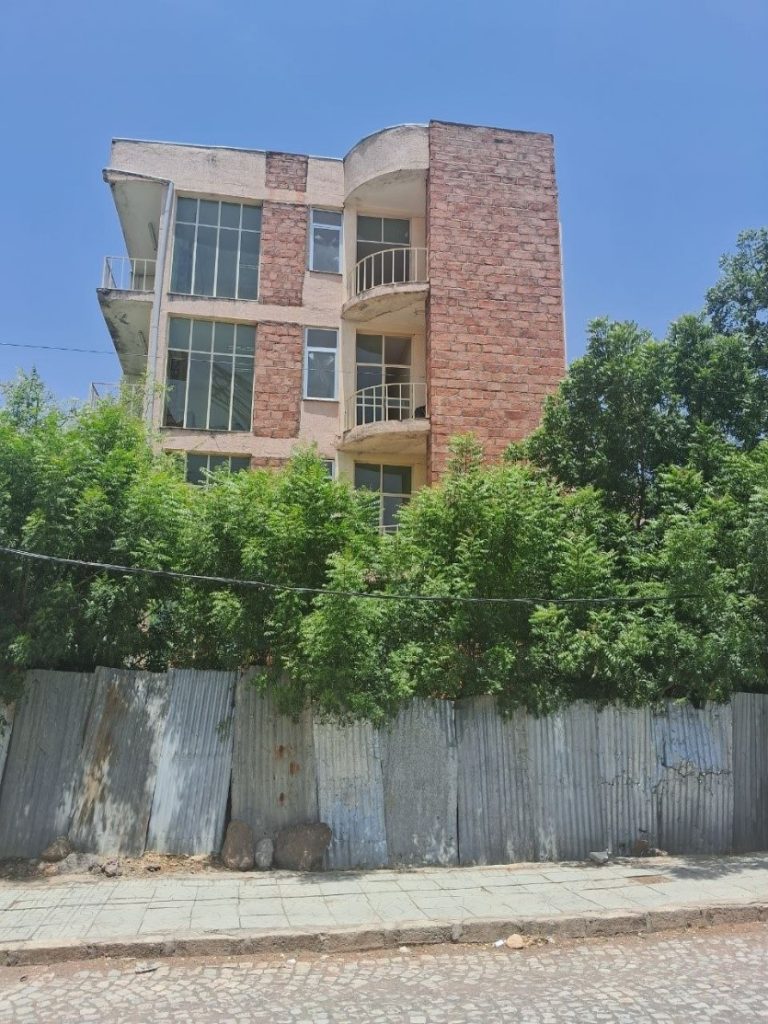
Figure 1: The building in Sheraro Town from which victims of forced conscription escaped.
Incident 2: Sheraro Town (Mid-April 2026)
Negasi Gebremedhin (name changed) is a 29-year-old youth and former university student. He resides in Kebele Muse, Sheraro Town, Northwestern Zone, and previously participated in the 2020–2022 war. Around mid-April 2026, while his father’s Teskhar (a traditional religious memorial feast) was being held at approximately 12:00 PM, a local police officer and three other unidentified armed men arrived. They called him out from inside the memorial tent, made him step outside, and after a lengthy conversation, took him away directly from the venue. His family later learned that Negasi had been returned to his former military unit.
Forced recruitment has been spreading from Sheraro Town to other areas. Currently, in Shire Endaselasie and surrounding areas, operations are heavily targeting youth who formerly served in the military. Information obtained from families whose children were forcibly taken indicates that these individuals are being rounded up and gathered at what used to be the Northern Command camp in the area, where individuals with and without physical disabilities are being screened based on physical appearance, and anyone deemed capable is being forcibly conscripted.
Incident 3: Zana Woreda (May 30, 2026)
On Saturday, May 30, 2026, while the Champions League final match was being broadcast in Zana Woreda of the Northwestern Zone, armed men conducting forced recruitments launched a violent roundup between 10:00 PM and 11:00 PM local time. Youth were forcibly abducted from DSTV viewing centers, bars, and bingo halls, gathered together, and forced to spend the night locked in five classrooms of a local school.
An eyewitness and resident, Ato Gebremichael, informed our organization that the armed men conducting the forced recruitment that night belonged to a unit known as “Army 11.” He explained that the armed men explicitly threatened actions against anyone who attempted to escape. Due to the large number of armed men, they deployed across various sectors of the town to carry out the forced recruitment. Some youth managed to go into hiding. One youth who evaded conscription confirmed to our organization that certain bar owners hid young people after learning of the armed men’s arrival.
Kibrom, a youth who escaped the roundup, described the situation to our organization, stating that he was watching the football match with friends. When it became known that armed men were entering, the bar owner hid him and his friend, allowing them to evade recruitment. Eyewitnesses confirmed that hundreds of youth were forcefully rounded up and taken away that night.
Incident 4: Zana Woreda (Rural Kebele)
In another incident in a rural kebele of Zana Woreda, an eyewitness provided a statement to our organization revealing that the kebele administration lured youth by claiming they would distribute land. Once gathered, a mass roundup was executed, and the youth were taken to a military training camp located near the river locally known as Frfr’a.
Expansion to Central and Eastern Zones:
Incident 5: Ahforom Wereda ( may 23, 2026)
Shushay Hagos (name changed) is a 32-year-old merchant residing in Enticho Town, Central Zone. He is a father of four and has never previously served in the military. On May 23, 2026, at approximately 7:30 PM, armed men approached him at his shop in Kebele 01 of Enticho Town and demanded he join the military. When he refused, an eyewitness stated that the armed men beat him with sticks and dragged him away.
Incident 6: Kola Tembien Area (May 20, 2026)
Forced conscription and roundups have also deeply affected Tembien and surrounding areas. A former kebele official who participated in rounding up youth from Keyih Tekli Woreda in the Kola Tembien area testified that on May 20, 2026, four armed men from a military force called “Army 60” held an evening meeting with local kebele leaders. The witness stated:
“The next day, on Ginbot 13, 2018 E.C. [approximately May 2026 G.C.], around 7:00 PM (1:00 PM local time), kebele leaders from various jurisdictions and a large contingent of Army 60 members jointly surrounded a crowded market located in a kebele called Adi-Ha. By blocking and waiting on the roads, we rounded up more than 60 young people. Since it was mandatory, I participated in the roundup myself.
These youth were gathered and confined inside Gebreselasie Abraha High School. Although the youth launched a widespread protest, shouting that they would not go under such forced conditions, no one listened. Among them was a 16-year-old boy whom I know personally. Since one of the kebele leaders had a child of the same age, the boy pleaded, ‘I am the same age as your child. I am underage. Please let me go,’ but they refused to release him. Though the boy eventually managed to escape the school and flee, authorities have now imprisoned his father, demanding that he hand over his son.
I know that the youth gathered in this roundup have now been taken to a military training camp called Seguh, near the Nebelet area. Personally, because forcing people I know closely into military service pits me against my own community and because my conscience cannot accept it, I have left the area and am currently living in hiding elsewhere.”
Two other eyewitnesses questioned by telephone regarding this specific incident provided similar testimonies.
Incident 7: Bizet Wereda ( Eastern Zone, April 19, 2026, )
On April 19, 2026, in a location just north of Bizet Town in the Eastern Zone, an eyewitness reported that more than 18 youth engaged in traditional gold mining were rounded up, gathered at the woreda administration office, loaded onto trucks, and driven away the following day.
- Conclusion of Findings
Our organization has spoken with more than 27 individuals, both in person and by telephone, across various areas. We have concluded that, with the exception of Mekelle and a few specific localities, forced conscription and mass roundups (Afesa) are actively being perpetrated throughout most of the Tigray Region.
- Violations of Law and Rights
5.1. Violations of the Ethiopian Constitution
- Prohibition of Forced Labor / Right to Conscientious Objection (Article 18(3)): No person shall be required to perform forced or compulsory labor. Unless falling under the specific exceptions enumerated in Article 18(4), any form of compulsory labor, including forced military recruitment, is strictly prohibited.
- Arbitrary Detention (Articles 16 and 17): The Constitution guarantees the liberty and security of the person. Holding 51 youth on the third floor of the Sheraro Woreda office and confining youth within school classrooms in Zana Woreda without a legal warrant constitutes unlawful and arbitrary detention.
5.2. Violations of the African Charter on Human and Peoples’ Rights (ACHPR)
- Arbitrary Arrest and Freedom of Movement (Articles 6 and 12): The mass roundups (Afesa) carried out in bars, bingo halls, and mining sites violate individual liberty. The threats of action against those who flee force youth into hiding, stripping them of their freedom of movement.
6.3 Violations of International Covenants
- Right to Conscientious Objection (ICCPR Article 18): The United Nations Human Rights Committee derives this right from the freedom of thought, conscience, and religion. Accordingly, if an individual’s conscience does not permit participation in war, they must not be compelled to do so.
- Arbitrary Detention Linked to Roundups (ICCPR Article 9): Under Category V of the United Nations Working Group on Arbitrary Detention (WGAD), detaining individuals to enforce an informal, extra-legal, or illegal conscription system renders the deprivation of liberty entirely arbitrary.
- Required Actions and Remedies
6.1 To the Tigray Regional Authorities:
- Immediately halt all roundup operations (Afesa) and the tracking down of youth.
- Unconditionally release all individuals currently detained for forced enrollment at transit points, administrative buildings, schools, or military camps.
- Allow human rights institutions full access to inspect temporary detention sites across the Northwestern, Central, and Eastern Zones.
- Recognize that individuals in positions of authority, whether they order these acts or possess the power to halt them, as well as those directly executing them, may be held personally and criminally liable.
- Identify the root causes of the conflict and pursue solutions in accordance with the Pretoria Agreement, focusing heavily on averting further conflict and war.
6.2 To the Federal Government Bodies:
- Provide fuel, budget allocations, cash, and other basic services and supplies to citizens residing in the Tigray Region.
- Expand economic opportunities for Tigrayan youth and protect them from human trafficking.
- Refrain from actions that could trigger conflict and exert efforts to avert war by implementing solutions based on the Pretoria Agreement.
6.3 To International Actors:
- Enforce DDR Compliance: – As guarantors of the Pretoria Agreement, we implore the African Union, the United States Government, the European Union, and other stakeholders to formally view and condemn these roundup campaigns as violations of security guarantees and to exert pressure to halt these practices.
- Support Enforcement of the Pretoria Agreement:- Support full implementation of the Pretoria Agreement to prevent another conflict, which raises deep concerns regarding future human rights violations.
Human Rights First – Ethiopia
Make Human Rights the Center of Decision!!