Media & Advocacy
Public interest litigation press briefs, international news investigations, and legal advocacy campaigns defending civil liberties across Ethiopia.
Ethiopian Airlines faces legal case over claims it blocks Tigrayans from travel
This article is more than 2 years old
Passengers accuse airline of refusing to sell tickets to people from the ethnic minority to fly from northern region to Addis Ababa
Guardian correspondent Wed 31 May 2023 11.32 BSTShare
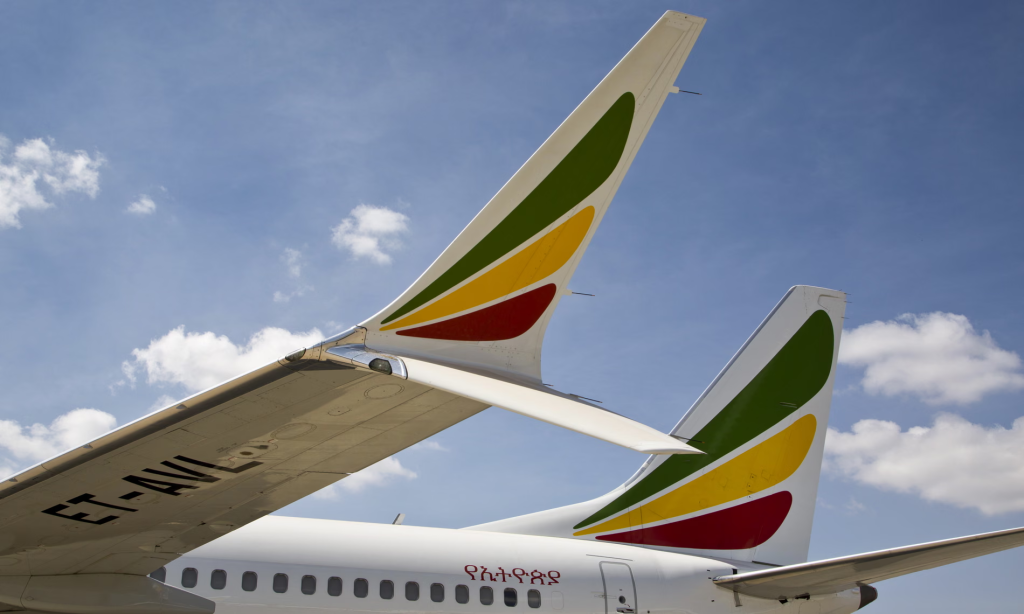
A civil society organisation has launched a lawsuit against Ethiopian Airlines, accusing the state-owned carrier of discriminating against ethnic Tigrayans.
The suit brought by Human Rights First, a local NGO, claims the airline is preventing “Tigrayans aged 15 to 60” from buying tickets for flights from the northern Tigray region to Addis Ababa, the federal capital. It also claims the company has increased ticket prices for the route as a form of “collective sanction” against the people of Tigray.
The group claims this violates Ethiopia’s constitution, which contains articles ensuring equality among ethnic groups and guaranteeing freedom of movement.
“By discriminating between citizens and limiting their freedom of movement, the accused has infringed upon their fundamental and democratic rights,” the lawsuit document states. “These charges have been presented in order to compel the accused to cease these violations.”
Tigrayans make up about 6 million of Ethiopia’s population of about 120 million. Their home region of Tigray was at the centre of a civil war in 2020-22, which killed hundreds of thousands of people and featured widespread human rights abuses.
For much of the conflict, Tigray was cut off from the rest of Ethiopia, with communications and transport links severed. Flights between Addis Ababa and the Tigrayan towns of Shire and Mekelle, the regional capital, resumed in late December after the signing of a ceasefire a month before.
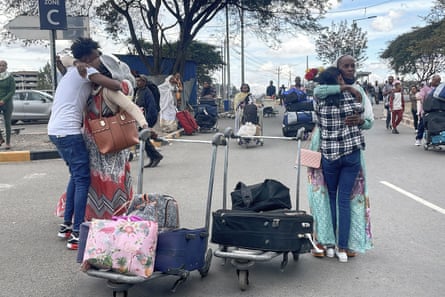
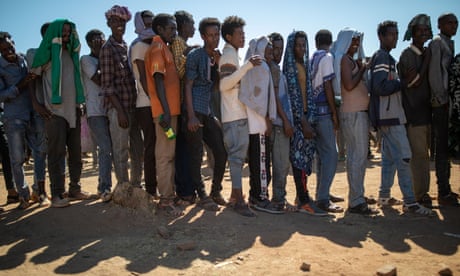
However, Tigrayans trying to travel to Addis Ababa say they have been prevented from buying tickets and from boarding Ethiopian Airlines flights.
Mehret Okubay Berehe, 30, claims she was blocked from entering Mekelle’s Alula Aba Nega airport in early January by Ethiopian Airlines staff, despite holding a ticket. She was travelling to Addis Ababa to seek medical attention for an eye condition.
“They said, ‘you can’t travel’,” she said. “When I asked why, they said it was because of my age.” She was only allowed to travel after getting a letter from her doctor a few days later.
Berhe, another resident of Tigray, claimed he had been turned away from the airport while he queued to buy a ticket two weeks ago. He had to travel instead to Addis Ababa by bus, a journey that took two days because of security restrictions along the route.
“When you enter the airport, there are security officers who have the right to select the person who is allowed to buy the ticket,” he said. “They told me I was not allowed to go to Addis; the reason [given] was my age. They said the tickets are only for elderly people or sick people, or women with young children.”
Berhe estimated that “about 200” others in the queue were turned away.
A former Ethiopian Airlines employee, who spoke on the condition of anonymity, told the Guardian that staff had been briefed in mid-January not to sell tickets to people aged 15-65 travelling from Tigray. Those who secure tickets only do so after lengthy background checks involving the intelligence services, they said.
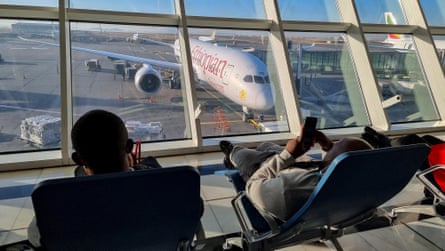
Staff were told this stemmed from government security concerns and a potential exodus of young people from Tigray, which is experiencing a humanitarian crisis, according to the former employee. “Based on the request of the government, we don’t serve people aged 15 to 65,” they said.
An internal email sent by Girum Abebe, Ethiopian Airlines’ sales director for Addis Ababa, on 12 January and seen by the Guardian, instructed employees to tell customers that seats on flights from Tigray were limited due to the “need to prioritise needy passengers”.
“This was not true,” the former employee said. “The flights are not full and seats are available.”
“It is official discrimination,” they added. “If you protest about this issue, they automatically suspend you or terminate your contract.”
Ethiopian Airlines is Africa’s largest air carrier and transported 12.7 million passengers last year. It is a member of Star Alliance, the world’s biggest airline association, which also includes Lufthansa, United Airlines and EgyptAir.
The airline has previously faced allegations that it transported weapons between Addis Ababa and cities in Eritrea, which fought in the Tigray war alongside Ethiopia’s federal military. The company denied the allegations and said it “strictly complies with all national, regional and international aviation-related regulations”.
The lawsuit brought by Human Rights First is due to be heard at the high court in Addis Ababa this week. A lawyer involved in the case described any restriction on selling tickets to ethnic Tigrayans as “a huge violation of rights”.
Ethiopian Airlines has been approached for comment but had not responded by the time of going to publication.
Rights group says repeated court delays undermine strategic lawsuit on IDPs’ return
- Post author:Human Rights First
- Post published:30 April 2026
- Post category:Uncategorised
- Post comments:0 Comments
#Ethiopia: Rights group says repeated court delays undermine strategic lawsuit on IDPs’ return – Addis Standard
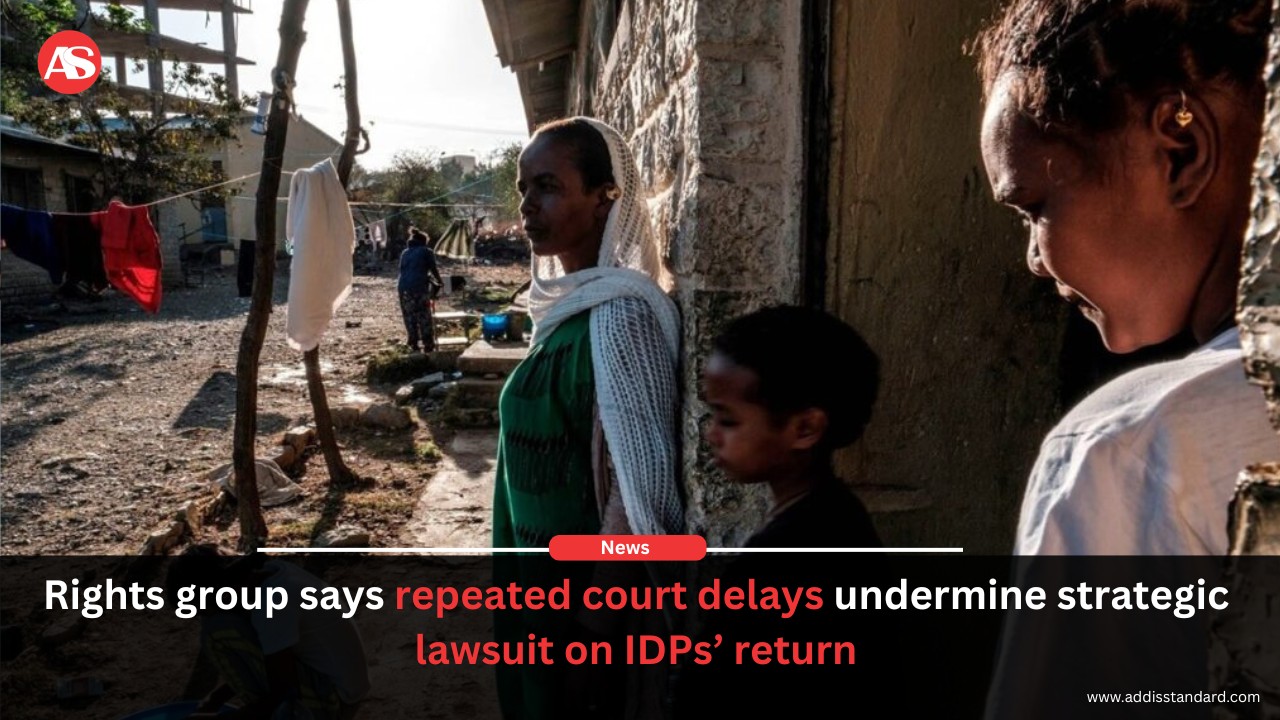
Human Rights First has criticized repeated delays in a lawsuit it filed before the Federal High Court over the return of internally displaced persons (#IDPs), saying prolonged adjournments are weakening prospects for legal remedies and exposing broader failures in judicial response to displacement-related grievances. The case, first submitted in November last year, has reportedly been adjourned more than ten times, including delays in issuing summonses, which the rights group described as evidence of judicial inefficiency.
Speaking to Addis Standard, Tesfalem Berhe, Human Rights First Director said the lawsuit was conceived as a form of strategic litigation aimed at promoting the use of legal mechanisms, rather than political confrontation, to address grievances linked to displacement. He argued that had the court pursued a more strategic and law-driven approach, the case could have contributed to broader efforts to reduce political conflict and reinforce rule-of-law based solutions.
Click the link in the comment section to read the news.